





ABOUT ROLFING
Most people try Rolfing to alleviate muscular or joint pain. In my experience, Rolfing can be very effective for pain reduction. Rolfing also helps people feel younger and move with more freedom. Many clients also notice an improvement in balance and they tend to have more awareness of their bodies which helps them avoid further injury. I find it quite interesting that each person's experience with Rolfing is unique based on his/her history, physiology and motivations.
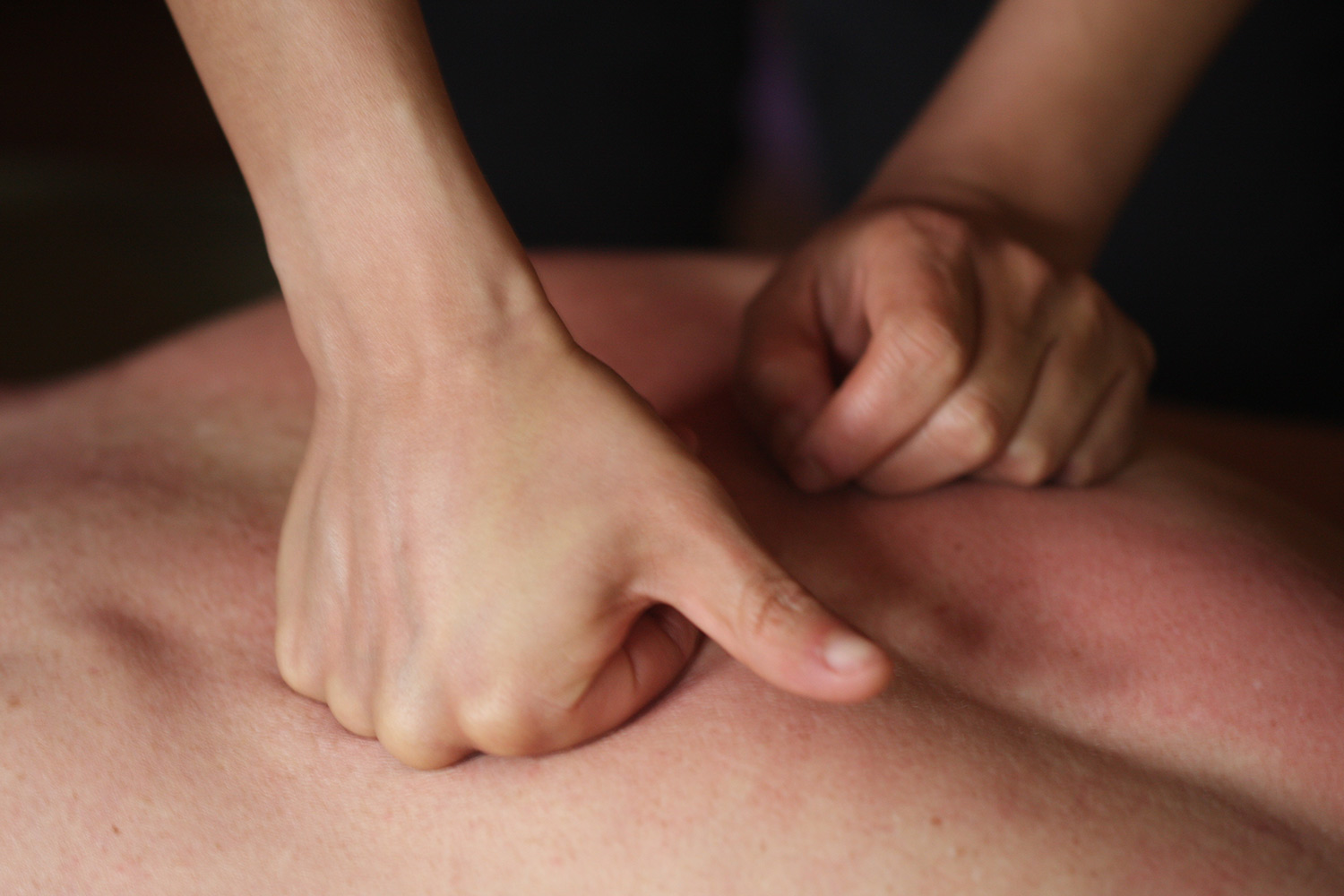
Rolfing was developed by Dr. Ida P. Rolf during the mid 1900's. Dr. Rolf recognized the vital roles that gravity and connective tissue play in the body's organization. Connective tissue wraps and connects all of our muscles, bones, and organs. It supports the soft tissues, positions the bones, determines the direction of muscle pulls and movement and gives the body its shape. Rolfers use their hands and elbows to free restrictions in this connective tissue matrix.
Before the physical manipulation of the muscles and connective tissue begins, Rolfers look at how each person is adapting to the force of gravity. For example, a person's neck may hurt because they have been holding their head forward or to one side (out of line with gravity) for days, weeks or a lifetime. This habit of holding the head in one position often becomes unconscious yet the pain is signaling that their body is at war with gravity. Accidents and stress also cause people to get out of line with gravity contributing to pain. Rolfers first gather information by listening to their client's history, then they use their eyes to get clues as to where to place their hands, fingers or elbows.
For most people Rolfing just feels good, although clients can feel moments of discomfort it should never be extremely painful. The touch ranges from light to deep depending on the session and the client. After the session, clients often experience greater range of motion, improved coordination and a sense of rejuvenation. Although it can be beneficial to receive just one session, Rolfing is traditionally and ideally performed over a series of sessions. Most people continue to receive "tune-ups" or advanced work from time to time. Please check my success stories page to see how some of my clients have responded to Rolfing.